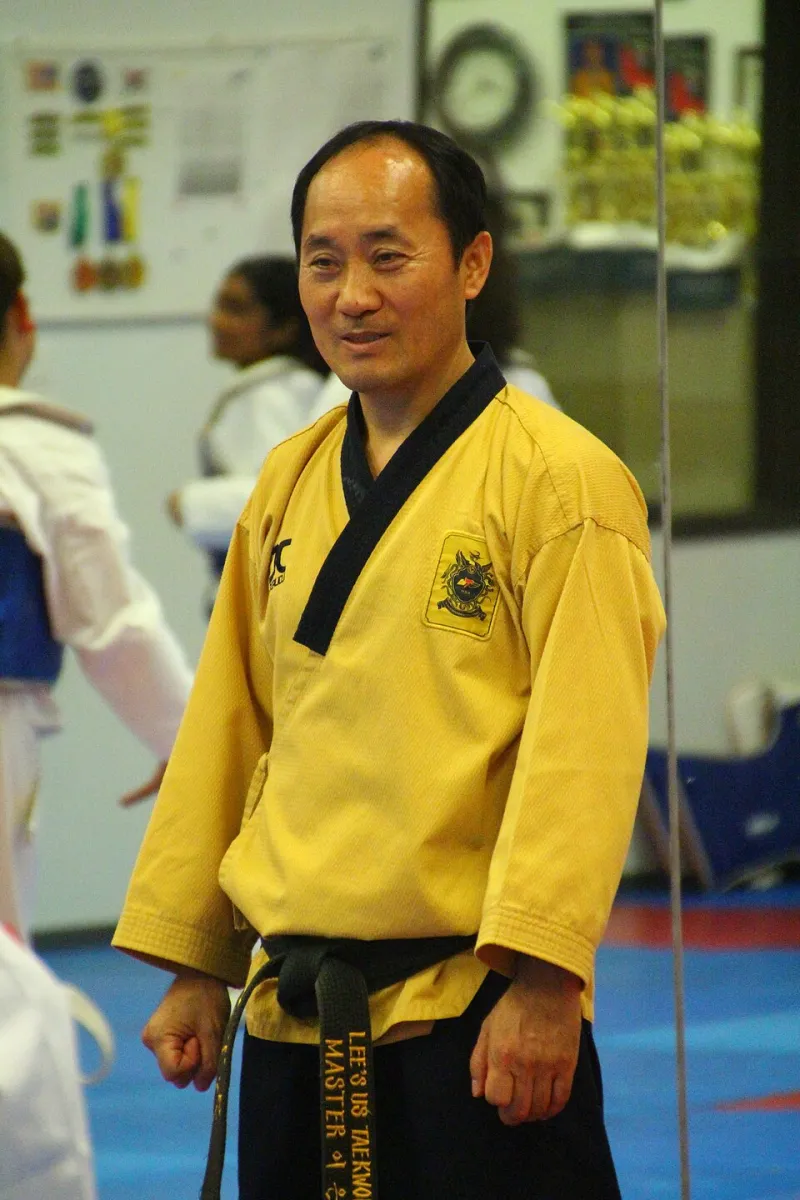
The Pattern You Keep Dodging Is Your Best Coach

Photo: Sandro Halank, Wikimedia Commons, CC BY-SA 4.0, via Wikimedia Commons
Every ITF student has a tul they quietly negotiate with. Maybe it is the one with the spinning back kick, the one that changes direction three times before you find your breath, or the one that makes your knees feel like they belong to someone else. You do not announce that you are skipping it. You just practice something else. Again. That is not a character flaw. It is information.
Your least-favorite pattern is often the most honest coach in the room. It points at the exact place where your stance, timing, and power are not yet talking to each other. Orion's Belt instructors see it all the time: athletes who can run a favorite tul with confidence but stall on the one that asks for a transition they have not owned yet. The avoidance is not random. It is your body protecting itself from a movement it does not trust.
Avoidance Is Feedback, Not a Discipline Problem
Most of us treat a skipped tul like a moral failure. We add it to the bottom of the list, promise to drill it later, and then feel vaguely guilty when later never arrives. A better move is to treat the pattern like a diagnostic test. What exactly are you avoiding? Is it a turn? A stance change? A kick that requires you to balance on one leg while your hips are still catching up? The answer is usually more specific than the whole tul.
Orion's Belt coaches often ask students a simple question: which part of the pattern makes you sigh? That sigh is the starting line. If you can name the moment, you can train the moment. If you only say you hate the whole thing, you stay stuck at the surface.
Three Clues Your Least-Favorite Tul Is Dropping
Stance transitions
Patterns are not collections of blocks and kicks. They are transitions connected by breathing. A tul that moves from a walking stance to a fixed stance, or from an L-stance into a longer front stance, will expose every shortcut in your footwork. If you feel rushed, wobbly, or late, the problem may not be the technique. It may be the space between techniques.
Timing gaps
Every tul has a rhythm. Some moves should snap, some should settle, and some should feel like a held note. When a pattern feels impossible, it is often because you are giving every move the same speed. That is like clapping through a song. The pattern is asking for contrast, and your body is answering with a flat line.
Power leaks
Power leaks show up as small things: a heel that lifts, a shoulder that rises, a hip that never finishes its rotation, a breath that stops halfway through a strike. In a favorite tul, you can muscle past them. In a disliked tul, they multiply. The pattern is not picking on you. It is showing you where force is escaping before it reaches the target.
Pick One Tul and Get a Baseline
Do not try to rescue every pattern at once. Choose the one you avoid most. Run it once, film it from the front and the side, and watch it without commentary. You are not looking for a highlight reel. You are looking for the first moment you hesitate.
Mark three spots: where your feet feel unsure, where your timing goes flat, and where your power fades. Write them down in plain language. Not 'bad pattern' but 'loses balance on the second turn' or 'rushes the low block before the step lands.' That is the language a coach can work with.
A Four-Week Rescue Plan
Week 1: Isolate the transitions
Spend ten minutes, three times this week, on the transitions only. No power, no speed, no ego. Break the tul into three-move chunks and repeat the seams between them. If the pattern turns left, practice the step and the turn until your feet know the route. Slow is not a punishment. Slow is how you find the leak.
Week 2: Put the rhythm back
Now add counts. Perform the tul with a steady count, then with a deliberate pause before the hardest section. Use a metronome or a simple hand clap if it helps. The goal is not to make the pattern robotic. The goal is to stop letting every technique arrive at the same time. By the end of the week, you should be able to say where the tul wants to breathe.
Week 3: Clean up the power
This is where you add intention without adding tension. Check your heel, hip, and breath on the three spots you marked. Practice the strikes against a pad or in the air with a partner watching for shoulder lift and early hip rotation. If you feel stronger but slower, that is fine. Power that arrives late is still better than power that never arrives at all.
Week 4: Reassemble and re-film
Run the full tul at moderate speed. Film it again from the same angles. Compare the new video to the baseline. You are not looking for perfection. You are looking for fewer hesitations, cleaner transitions, and a rhythm that sounds like a pattern instead of a list. Then take it to your instructor and ask for one correction. Just one. You can chase the next correction after that.
What Instructors Notice When You Stop Skipping
Orion's Belt coaches tend to spot avoided patterns quickly. The tell is not always a bad performance. Sometimes it is a student who suddenly needs a water break when the class moves into a certain tul. Instructors would rather hear 'I avoid this one because the turns scare me' than watch another season of quiet dodging. That kind of honesty makes the fix faster.
The same goes for testings and tournament prep. A pattern you have avoided for months will not become reliable under pressure. It will become the part of the form where your face changes. Bringing it into the open early gives you time to build a real solution instead of a last-minute patch.
The Pattern Is Not Your Enemy
You do not have to love the tul you avoid. You just have to stop pretending it is not talking. Your least-favorite pattern is a map of the work you have not done yet, and that is useful information. Train the seams, respect the rhythm, and clean up the leaks. The tul may never become your favorite. It can still become one of your best teachers.