Three Stars, Three Drills: Sharpening ITF Kick Mechanics Anywhere
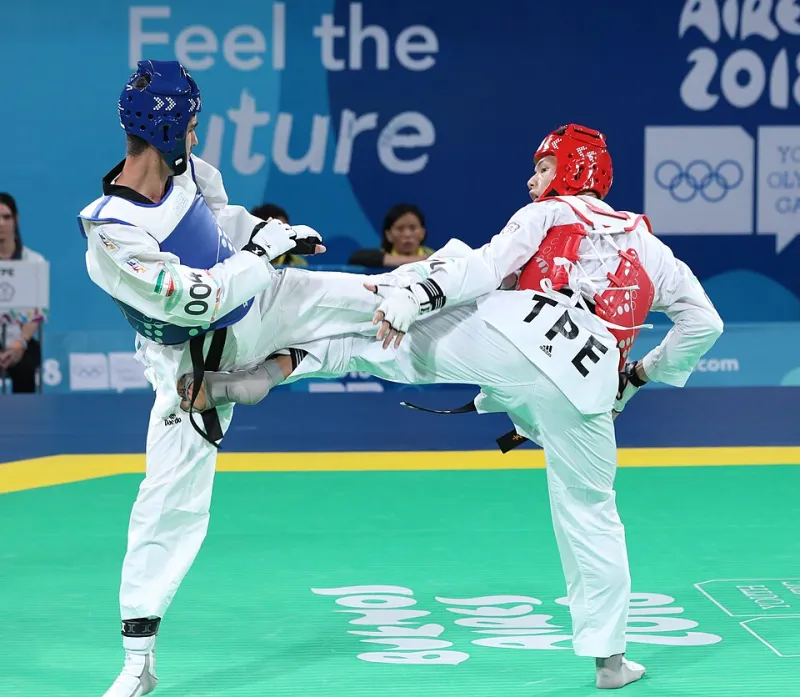
Photo: Sandro Halank, Wikimedia Commons, CC BY-SA 4.0, via Wikimedia Commons
Look up on a clear night and you'll find three stars in a near-perfect line. Orion's Belt has guided travelers for centuries. At Orion's Belt Taekwondo, those same three stars double as a teaching cue for the part of ITF kicking that students tend to rush: the mechanics between the floor and the target.
The Three-Star Method is simple. Each star stands for one drill — hip drive, chamber control, and landing balance. No pads, no bands, no gym membership required. You need roughly eight feet of clear floor, which means a garage, a driveway, a dojang corner, or the strip of carpet between the couch and the TV all work. Color belts and black belts run the same three drills with different rules, and a four-week test at the end tells you whether the work is actually showing up in your kicks.
Why These Three (and Why No Gear)
Most kicking problems in ITF sparring and patterns aren't flexibility problems. They're timing problems. The hip arrives late, the chamber collapses, or the landing leaves you tipped forward and out of position. Fix those three links and every kick in your toolkit gets cleaner — front, side, roundhouse, back, and the spinning techniques that show up later in the color-belt ranks.
The drills below use bodyweight only. That's on purpose. Gear can hide sloppy mechanics; gravity can't.
Star One: Hip Drive — The Alnitak Drill
Alnitak is the eastern star of the belt, and it's a good reminder that power starts at the back. The base drill is a slow hip rotation: stand in a relaxed parallel stance with hands on your hips, rotate the rear hip forward as if you're closing a heavy door, hold for three seconds, and return. Keep your chest tall and your head still.
Color belts: two sets of eight slow rotations per side, then one set of eight fast snaps. Hands stay on the hips the whole time so you can feel the movement instead of muscling it with the arms.
Black belts: add a step-in. Slide the lead foot, fire the rear hip, and land a side kick without dropping the chamber between the step and the strike. Three sets of six per leg. Then run one set with your eyes closed to check whether your balance is doing its job.
Star Two: Chamber Control — The Alnilam Drill
Alnilam sits in the middle of the belt and is the brightest of the three stars. It's also the middle of every kick: the chamber. The drill is a chamber ladder. Lift the knee to waist height with the foot cocked, hold for three seconds, extend slowly, re-chamber, hold for two, and lower.
Color belts: five reps per leg with a three-second hold at the top. Focus on keeping the supporting knee soft and the standing heel planted.
Black belts: build to a ten-second chamber hold, eyes closed, then snap the extension and re-chamber in under a second. Five reps per leg. The slow hold builds control; the fast snap builds the timing that judges and opponents actually see.
Star Three: Landing Balance — The Mintaka Drill
Mintaka is the western star, and it's the one that gets ignored. Students practice the kick and forget the return. The drill is simple: throw a mid-level kick, land back in your fighting stance, and hold for three seconds. Check that the rear heel is down, the front knee is soft, and your chest hasn't tipped past your toes.
Color belts: eight kicks per leg with a two-second landing hold. Count only the landings that stay still. If you hop, it doesn't count.
Black belts: add a follow-up technique after the landing — a backfist or a second kick — for three sets of six per leg. The goal is to prove you can land ready to do something else, not just land.
The Four-Week Test
You don't need a lab coat to measure progress. Pick a baseline day, log three numbers, train the drills three times a week for ten minutes, and retest in week four.
- Chamber speed: time ten fast chambers per leg with a stopwatch. Record the total seconds.
- Clean landings: throw ten kicks and count how many landings hold for three seconds with no hop and no heel lift.
- Hip finish: throw ten kicks and count how many finish with the rear heel pivoted and the chest upright.
Keep the log in your phone's notes app. Most students see the chamber time drop and the clean-landing count climb within a month, and the numbers give younger students something concrete to chase besides 'kick harder.'
Making It Stick
Ten minutes, three days a week, is enough. Run the drills before class when you're fresh, or after homework when the garage is quiet. The three stars are the memory cue: Alnitak for the hip, Alnilam for the chamber, Mintaka for the landing. Same sky, same three drills, cleaner kicks.